Elite sport doesn’t just create athletes; it creates women who know how to lead.
Women who can perform under pressure, manage brutal schedules, study hard things, advocate for causes, build businesses, enter new markets, challenge old systems and still show up when the whistle blows, the starter sounds or the next heat is called.
That is not a side effect of sport.
That is what sport does.
And women’s sport is full of evidence.
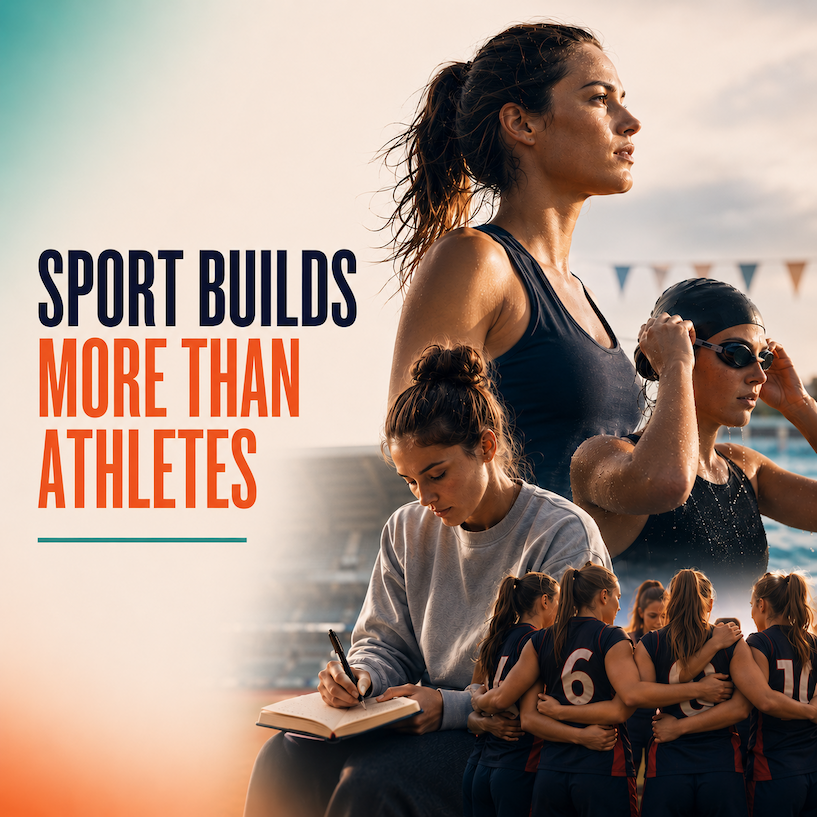
We talk a lot about keeping girls in sport because of what it means for health, confidence and belonging. All of that matters.
But there is another piece that deserves more attention.
When girls stay in sport, they don’t just become better athletes. They become women who know how to lead.
To compete at the highest level, you need more than talent. You need discipline, resilience, communication, decision-making, emotional control, physical courage, tactical intelligence and the ability to keep working when nobody is clapping.
Those traits don’t stay inside the lines of a court, the lanes of a pool or the break of a wave.
They spill over.
Into study. Business. Advocacy. Leadership. Community work. Into lives that are every bit as impressive as the sporting careers that helped shape them.
Elite sportswomen are rarely just athletes.
They are students, founders, graduates, entrepreneurs, advocates, co-designers, commercial operators, community builders and brand partners.
Because the same excellence that gets them to the top of sport tends to show up everywhere else too.
Kiera Austin: Built into the product
Athlete, student, advocate and co-designer of UnderAustin.
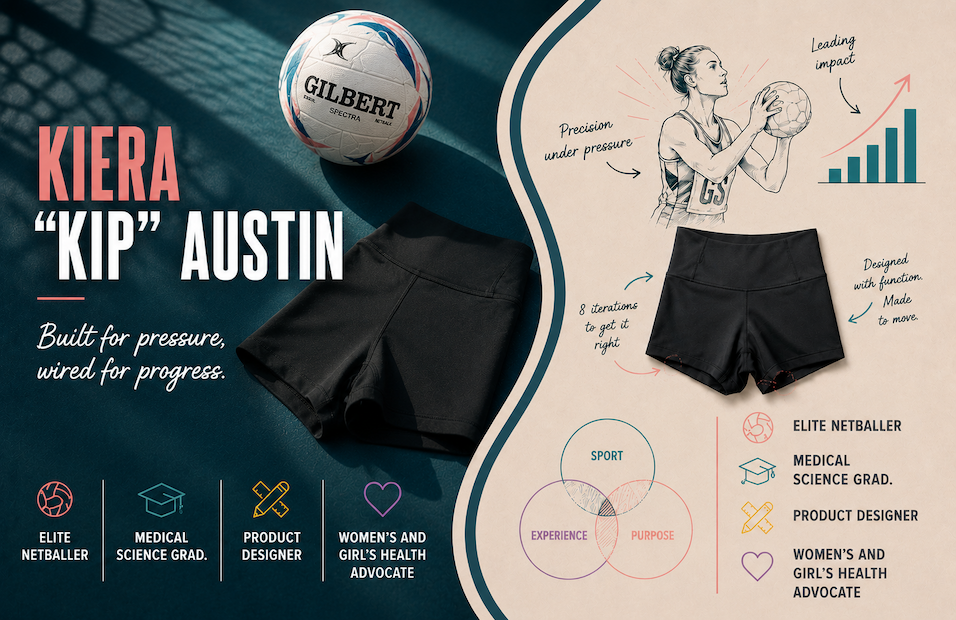
Kiera “Kip” Austin is one of Australia’s best netballers. She is also a Medical Science graduate, Masters student, women’s health advocate and co-designer of UnderAustin, our performance period undershort.
On court
- Australian Diamond
- One of the world’s leading goalers
- Elite performer in one of the most tactically demanding roles in netball
Beyond the court
- Completed a Medical Science degree
- Studying a Masters
- Speaks publicly about women’s health, fertility, periods and athlete wellbeing
- Co-designed UnderAustin through eight product iterations
UnderAustin was not a name licence. It was a co-design.
Kip tested prototypes in training and games, pushed back on poor samples and gave practical feedback until the product was right. Which sounds simple, except it requires the same thing elite sport does: standards, discipline and the willingness to keep going when the first version is not good enough.
The result?
Two months after launch, we had nearly sold through the first run. The second was already in production.
That didn’t happen because Kip put her name on it. It happened because she put herself into it.
Elite sport developed the standards. Business simply gave her another place to apply them.
Sally Fitzgibbons: Changing the system from inside it
From world-class surfer to founder, advocate and global sport leader.
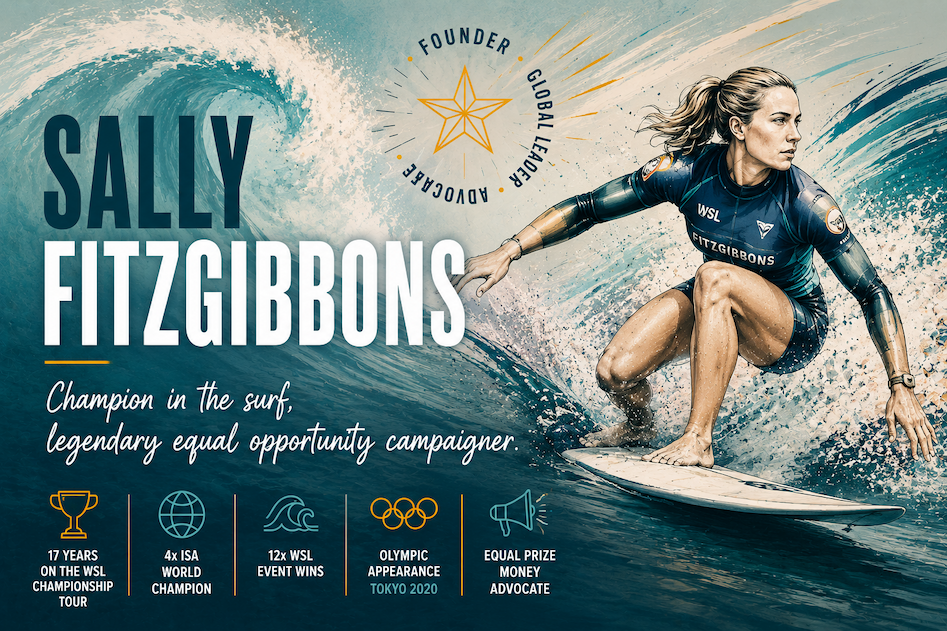
Sally Fitzgibbons has spent 17 years competing on the World Surf League Championship Tour. That alone says plenty. Surfing does not exactly hand out longevity like party favours.
In competition
- Four ISA World Titles
- 12 WSL event wins
- Olympic appearance at Tokyo 2020
- 17 years on the World Surf League Championship Tour
CURRENT ELTEE MVPs
-
UnderDance: High-Cut Active Period Undies
Regular price $27.00 USDRegular price -
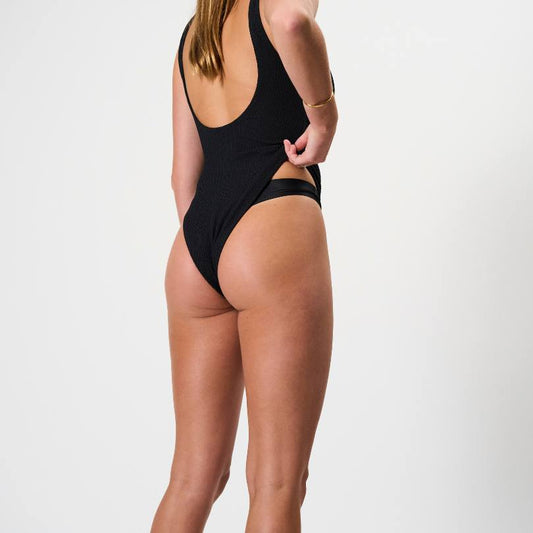
UnderSwim: Period Swim Underwear
Regular price $27.00 USDRegular price -
UnderSwim: Period Swim Underwear (G-Fit)
Regular price $27.00 USDRegular price -
Bumpers Briefs: First & Early Period Years Underwear
Regular price $18.00 USDRegular price



Beyond competition
- Built a broad endorsement portfolio across performance and lifestyle brands including Breitling, Boost Mobile, Accor Hotels and T&C SurfBoards
- Founded Fitzgibbons International in 2014
- Built the Train Like Sally app and a 12-week training program
- Partnered with Devika in 2024 to launch a VR art therapy experience for adults with neurodevelopmental disabilities
- Elected Vice President of the International Surfing Association in December 2024
Sally’s commercial profile matters because it moves beyond the appearance-first marketing that defined women’s surf sponsorship for decades.
She has also pushed at structural issues in the sport itself. She was publicly involved in the push for equal prize money on the WSL tour, which arrived in 2019. Since then, she has continued pressing on competitive opportunity, including the fact women still compete in fewer heats than men at WSL events.
That affects exposure, rankings and the commercial value of athletes lower in the field.
That is what excellence spilling over can look like: not just winning within the system, but helping change it.
Sally’s career shows what sport can build when performance, longevity, advocacy and commercial awareness start working together.
Stephanie Rice OAM: Building beyond the Olympic cycle
A champion swimmer turned business operator, educator and international commercial lead.
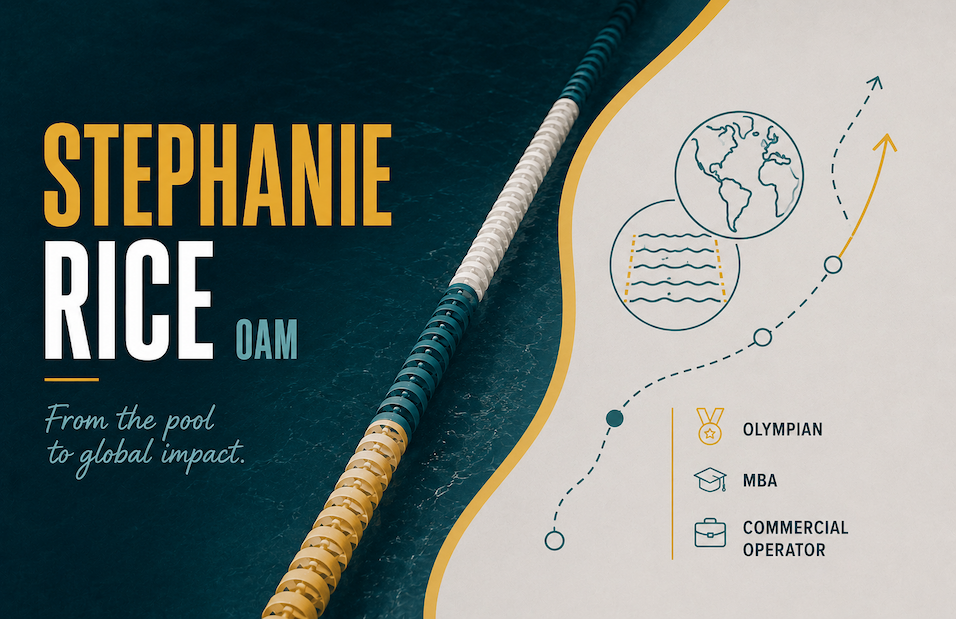
Stephanie Rice arrived at the 2008 Beijing Olympics as a 20-year-old and left as Australia’s breakout swimmer of the Games.
In the pool
- Three Olympic gold medals
- Two world records
- World Swimmer of the Year
- One of the defining Australian athletes of Beijing 2008
Beyond the pool
- Completed an MBA at the University of Queensland Business School, graduating in December 2024
- Founded RACERiCE, a children’s swimwear line
- Developed learn-to-swim programs in India
- Contributed to strategic planning for the Brisbane 2032 Olympic Games
- Relocated to Dubai in 2023 and joined Phygital International DMCC as a senior commercial executive
- Headed swim programs at My Sports Academy across water safety, learn-to-swim and performance development in the UAE
- Participated in the Australia India Youth Dialogue
Her path is not loud for the sake of being loud; it is strategic.
In a sport where endorsement windows for women have historically been narrow and tied to major Games cycles, Stephanie built beyond the cycle.
Education, product development, international markets, youth leadership, water safety and commercial strategy all sit inside the same story.
A young woman who reached the top of sport went on to build a career defined by systems, scale and self-direction. That is leadership with chlorinated receipts.
Amy Parmenter: Platform with purpose
Captain, graduate and charity co-founder using visibility to build something bigger.
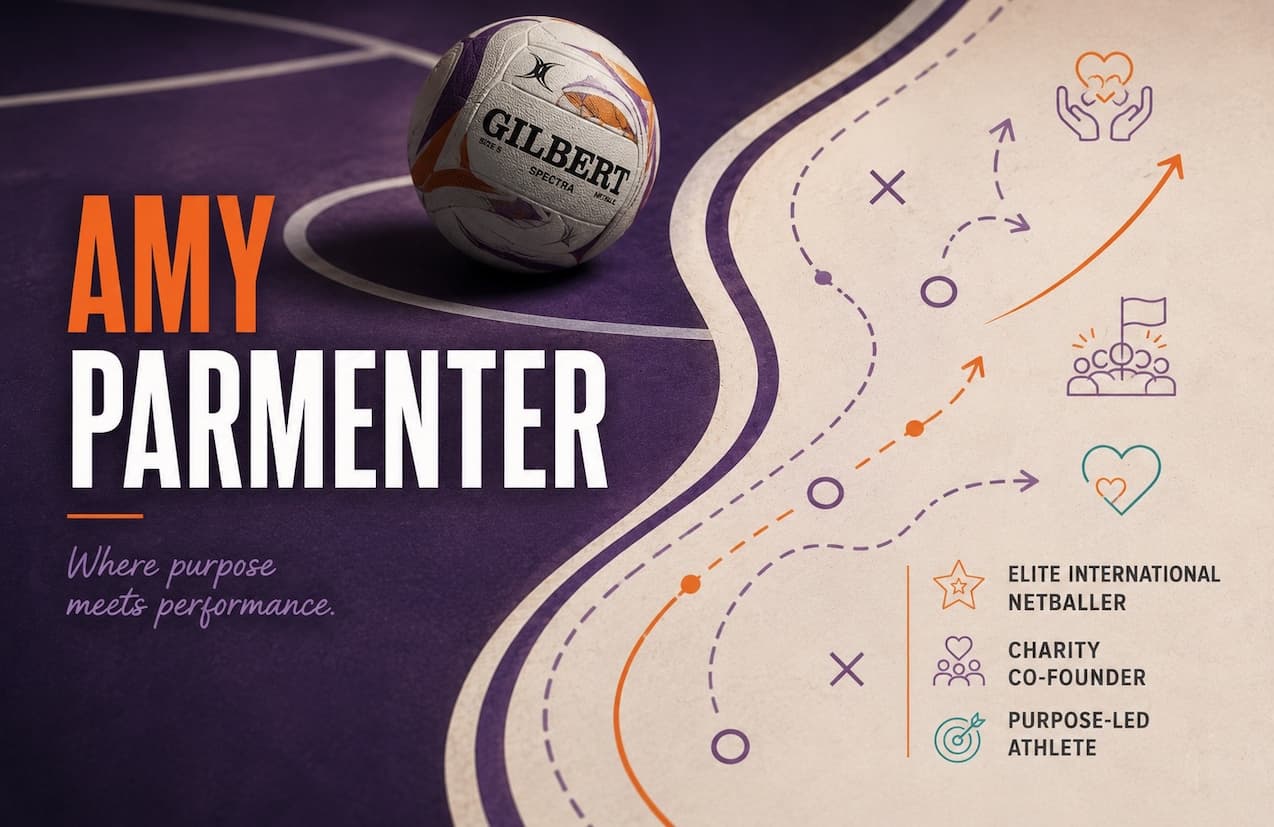
Amy Parmenter is an Australian Diamond, captain of the Melbourne Mavericks, a Law and Communications graduate, and co-founder of The Tie Dye Project.
On court
- Australian Diamond
- Captain of the Melbourne Mavericks
- Elite-level netballer in one of Australia’s most competitive women’s sporting environments
Beyond the court
- Completed Law and Communications studies
- Co-founded The Tie Dye Project in 2017 in memory of her mum, Gilly
- Helped grow the project into a registered charity
- Raised more than $1 million
- Sold more than 25,000 tie-dye products
- Supported 13 major projects across sarcoma research, cancer support and clinical trials
The Tie Dye Project is a clear example of what happens when an athlete uses her platform with purpose.
Amy has spoken about using whatever platform you have to make a positive impact, and The Tie Dye Project is the living, rainbow-coloured proof.
She captains at elite level. She has studied at a high level. She co-founded a charity. She leads a community.
This is what sport can build when girls are given the chance to keep going.
Ariarne Titmus: Performance, turned commercial force
From dominant swimmer to media, brand and Brisbane 2032 influence.
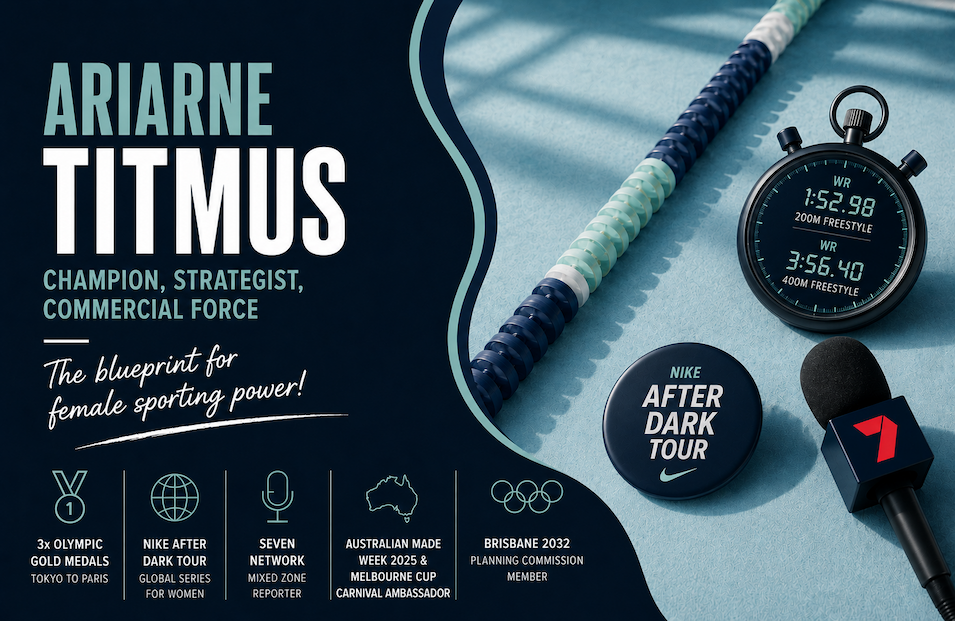
Ariarne Titmus didn’t just dominate her era of swimming. She helped reshape the commercial landscape around it.
In the pool
- Three individual Olympic gold medals
- World records in the 200m and 400m freestyle
- One of Australia’s defining athletes across Tokyo and Paris
Beyond the pool
- Retired in October 2025 and moved quickly into a commercial career
- Partnered with Nike on the global Nike After Dark Tour for women
- Named Australian Made Week 2025 ambassador
- Appointed Melbourne Cup Carnival ambassador for 2024
- Joined Seven Network as a mixed zone reporter
- Contributing to planning around the Brisbane 2032 Olympic Games
Nike’s After Dark Tour is about women reclaiming sport as participants, not spectators. Ariarne’s involvement feels like a natural extension of everything she represented in swimming: excellence, visibility and the commercial value of female athletes.
Her influence reaches beyond endorsements. Alongside athletes such as Kaylee McKeown and Emma McKeon, she helped create a rare moment where Australia’s female swimmers weren’t supporting characters.
They were the story.
The same clarity, competitiveness and discipline that made Ariarne exceptional in the pool are now shaping media, partnerships and Australia’s next home Olympic Games.
That is what happens when high performance becomes leadership.
Why staying in sport matters
Because girls carry sport into leadership, work and life.
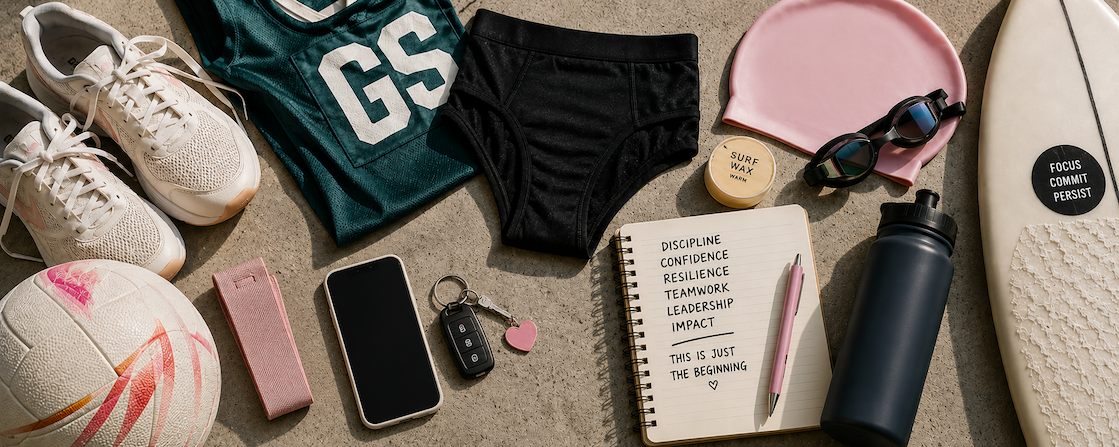
At Eltee Sydney, we focus on periods and sport because that is where our work sits. We make period underwear so girls can stay comfortable, confident and active, without missing training or quietly stepping away from the sports they love.
But this has never only been about participation. It is about what sport creates.
Girls who stay in sport learn to lead. They learn to communicate, take feedback, recover from losses, support others, advocate for themselves and keep going when things get hard.
Those lessons spill over into study, careers, businesses, charities, advocacy and leadership.
When girls stay in sport, they do not just become better athletes. They become women who know how to lead.
That is why we back sport for girls. Not for medals, although obviously, medals are nice. Very shiny. Very satisfying.
We back it because sport has been creating remarkable women for years, and the girls watching now deserve to know how far it can take them.
Featured collection
-
UnderSwim: Period Swim Underwear
Regular price $27.00 USDRegular price -
UnderDance: High-Cut Active Period Undies
Regular price $27.00 USDRegular price -
UnderSwim: Period Swim Underwear (G-Fit)
Regular price $27.00 USDRegular price