


12 Australian Women Who Changed the Shape of Sport
Sport has a long history of overlooking women, and an equally long history of reasons offered to justify it. Shorter seasons. Smaller budgets. Less broadcast time - which feeds directly into lower sponsorship revenue, reduced operational budgets and fewer development pathways for the athletes coming through. Conditions that are difficult to improve without first addressing the visibility that drives them.
On International Women's Day, we're giving kudos to twelve Australian sportswomen whose contribution extends way beyond their individual results.
They've shifted how sport is funded, covered, discussed and experienced and the next generations of girls' sport will be better for it.

1. Jess Fox - Canoe Slalom
Jess Fox is ranked number one on the 2024 Power 100 list of the most influential people in Australian sport. That ranking reflects more than race results. Fox has been an active member of the IOC Athletes' Commission and has used that platform to advocate for cleaner competition, better governance and stronger protections for athletes in subjective judging sports.
At the Paris 2024 Olympics, Fox won gold in both the C1 and kayak cross events - becoming the first athlete in Olympic history to win gold in three consecutive canoe slalom disciplines.
Her dominance has brought sustained media attention to a sport that historically receives very little of it, directly increasing junior participation rates in Australia.
"I want to see a pathway for the next generation that is better than what we had." - Jess Fox
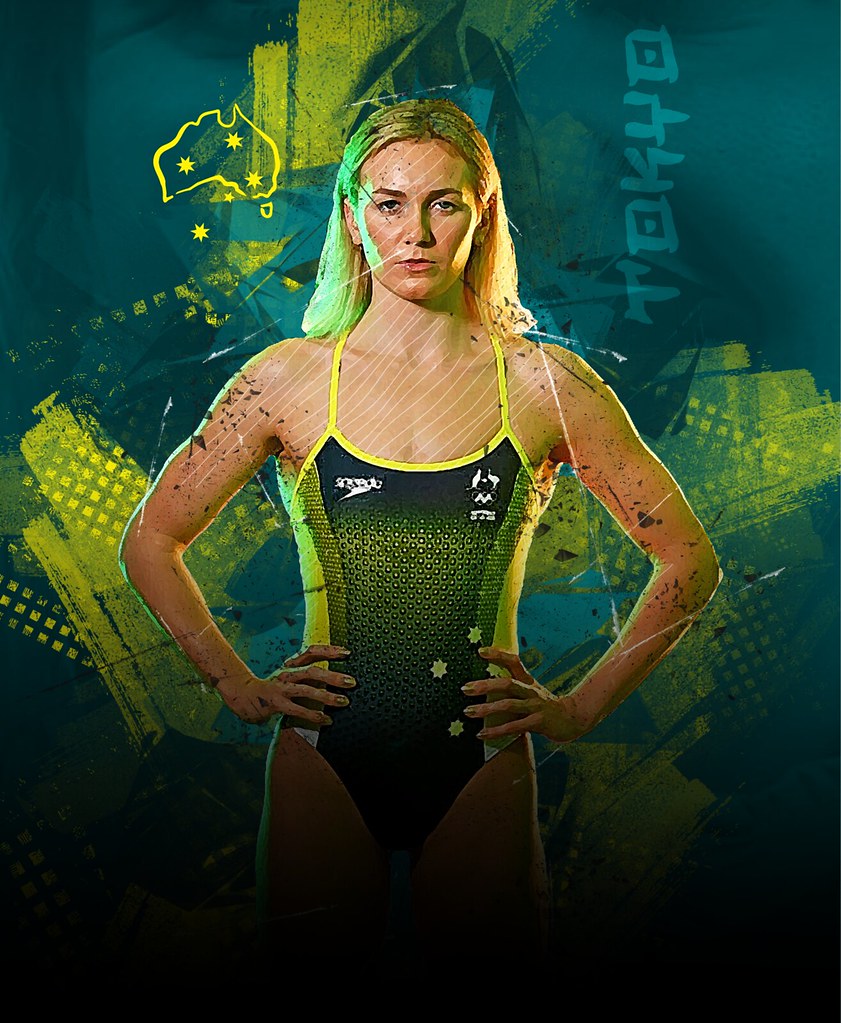
2. Ariarne Titmus - Swimming
Ariarne Titmus defended her Olympic 400m freestyle title at Paris 2024, cementing a dominance in the event that has made her one of the most decorated swimmers of her generation. Her rivalry with American Katie Ledecky produced some of the most-watched moments at consecutive Olympics and introduced a new generation of Australian girls to competitive swimming.
What matters as much as the medals is how Titmus speaks about performance, pressure and recovery. She has been direct about the psychological demands of elite sport and the importance of mental health support for young athletes - at a time when those conversations were not yet standard in professional swimming environments.
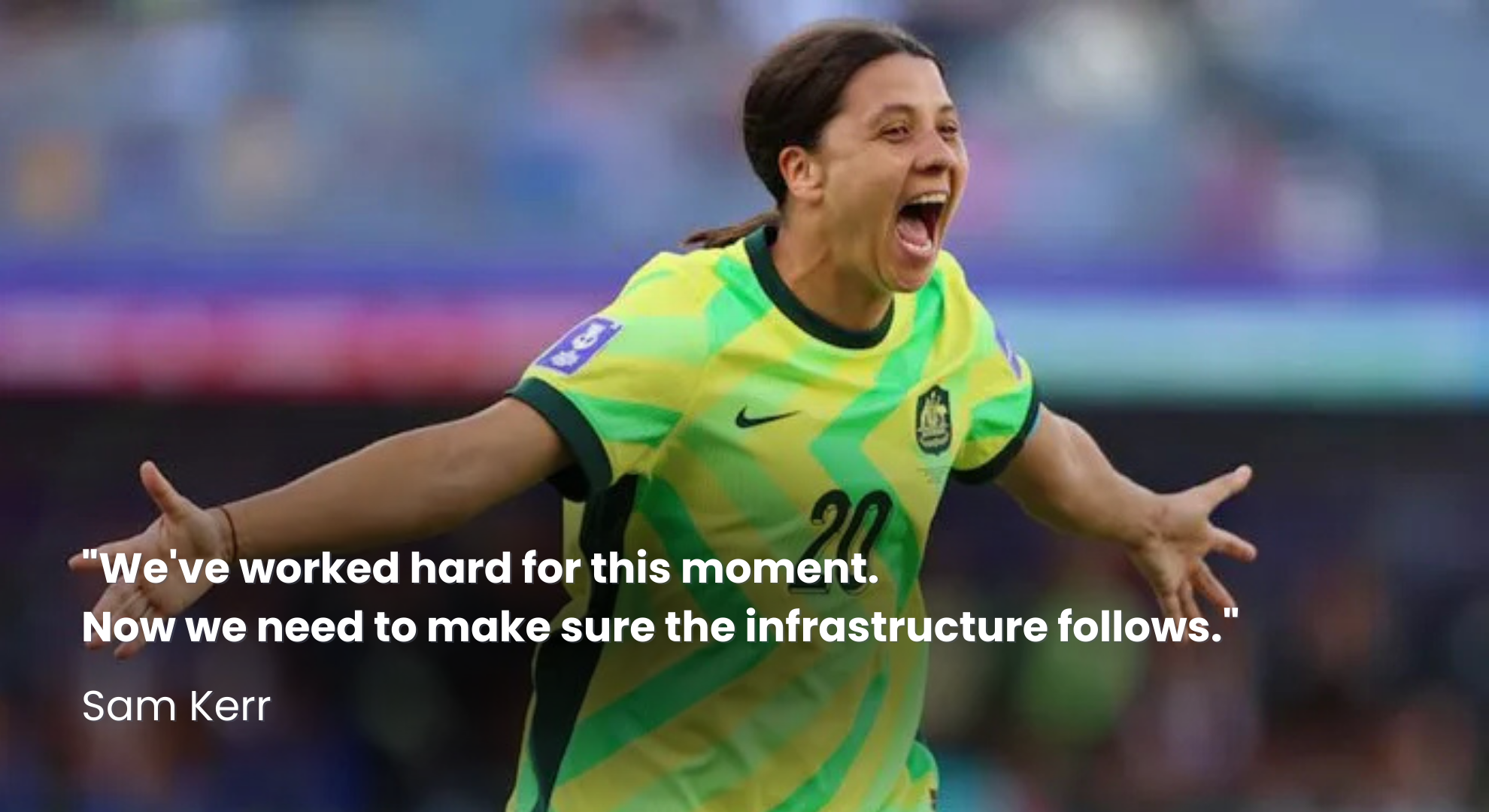
3. Sam Kerr - Football
Sam Kerr captained the Matildas to a World Cup semi-final on home soil in 2023. What followed was not just a sporting result. Attendance at women's football matches in Australia increased by 38 per cent in the year following the tournament, according to Football Australia data. The league's broadcast deal improved substantially.
Young girls' participation in football grew at a rate the sport had not seen in a decade.
Kerr did not cause any of this alone. But she was not quiet about what still needed to change, either. She named the disparity between men's and women's football - in pay, broadcast exposure and grassroots investment - repeatedly and publicly, while actively representing her country and while being one of the most watched female footballers in the world. That combination of visibility and directness is what made it land.
"We've worked hard for this moment. Now we need to make sure the infrastructure follows." - Sam Kerr
4. Ash Barty - Tennis and Advocacy
Ash Barty retired in March 2022 at the age of 25, ranked number one in the world and holding three Grand Slam titles - the French Open (2019), Wimbledon (2021) and the Australian Open (2022).
Her decision to retire at the peak of her powers (against the expectations of sponsors, media and a sporting public that wanted more) and to say plainly that she had achieved what she came to achieve, was a direct refusal to perform on anyone else's timeline. It restarted a conversation about what athletes owe their sport, and what sport owes them.
Barty is also Ngarigo. Her advocacy for Indigenous communities, and the visibility she brought to First Nations representation in elite sport, has been consistent throughout her career and beyond it. She is a patron of several programs connecting Indigenous youth with sport and education pathways.
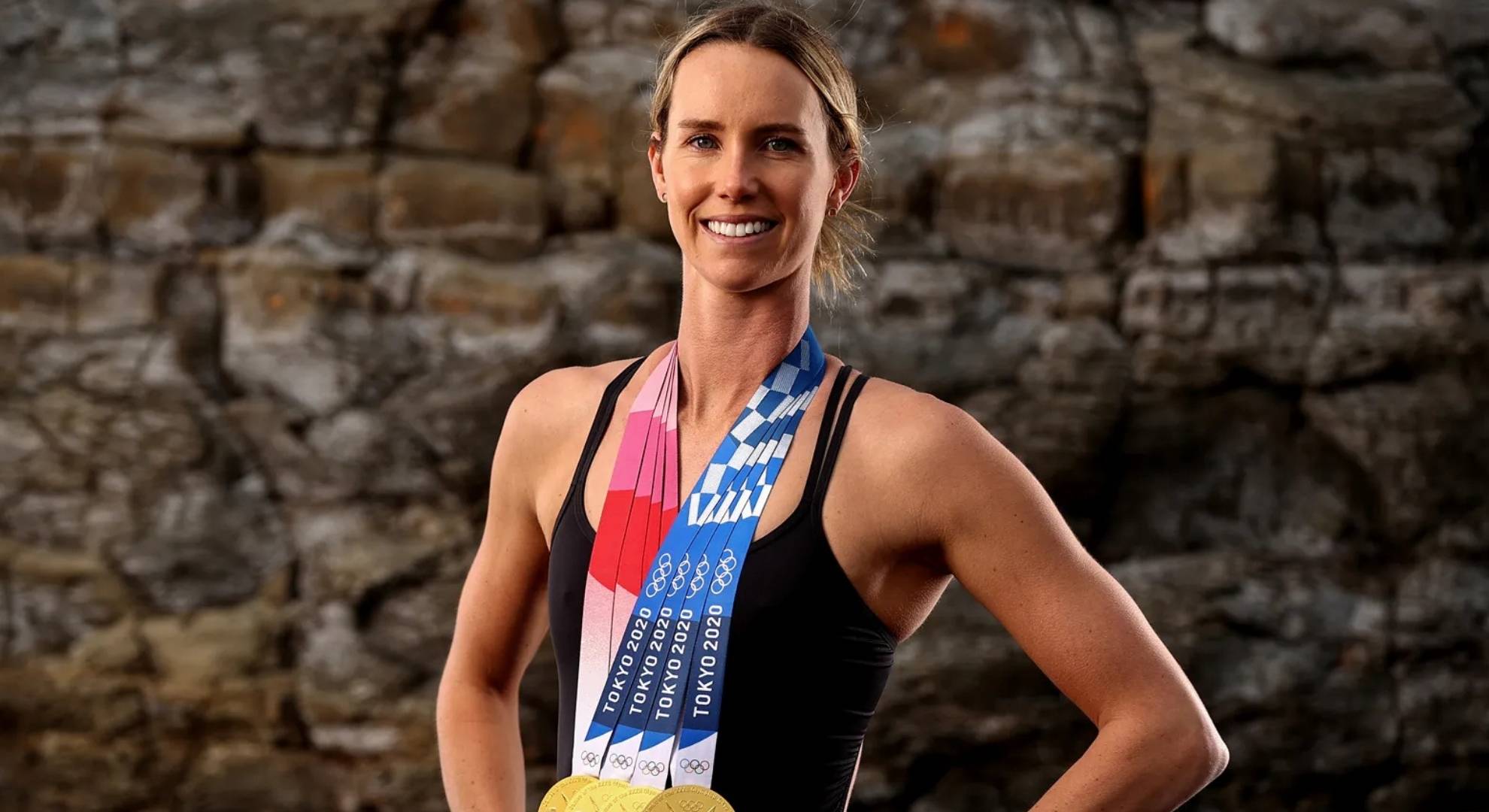
Emma McKeon is the most decorated Australian Olympian in history.
At the Tokyo 2020 Olympics, she equalled the record for the most medals won by a female athlete at a single Games. Her performances across four individual and relay events demonstrated a breadth and longevity in competitive swimming that is rarely seen.McKeon has also been a public advocate for support structures within high-performance sport - specifically around nutrition education, recovery access and the gap that exists between elite and sub-elite athletes. Her consistency has made her one of the most credible voices in those conversations.
6. Alyssa Healy - Cricket
Alyssa Healy captains the Australian women's cricket team and is one of the most effective wicketkeeper-batters in the history of the women's game. Under her leadership, the Australian team has continued to set standards for professionalism, preparation and public presence that have pushed women's cricket further into mainstream sports coverage.
The 2023 Women's T20 World Cup final was held at the MCG and drew a crowd of nearly 87,000 - the largest attendance ever recorded for a women's cricket match.
That does not happen without players who understand their responsibility not just to the result but to the sport's broader profile.
7. Nina Kennedy - Pole Vault
Nina Kennedy is one of Australia's most consistent track and field athletes in an event that demands technical precision and physical courage. At the Paris 2024 Olympics, Kennedy claimed gold in the women's pole vault.
She has been an important figure in bringing sustained attention to field events - a category often overshadowed even within athletics coverage - and has used her platform to advocate for better conditions and resourcing for field event specialists in Australia.
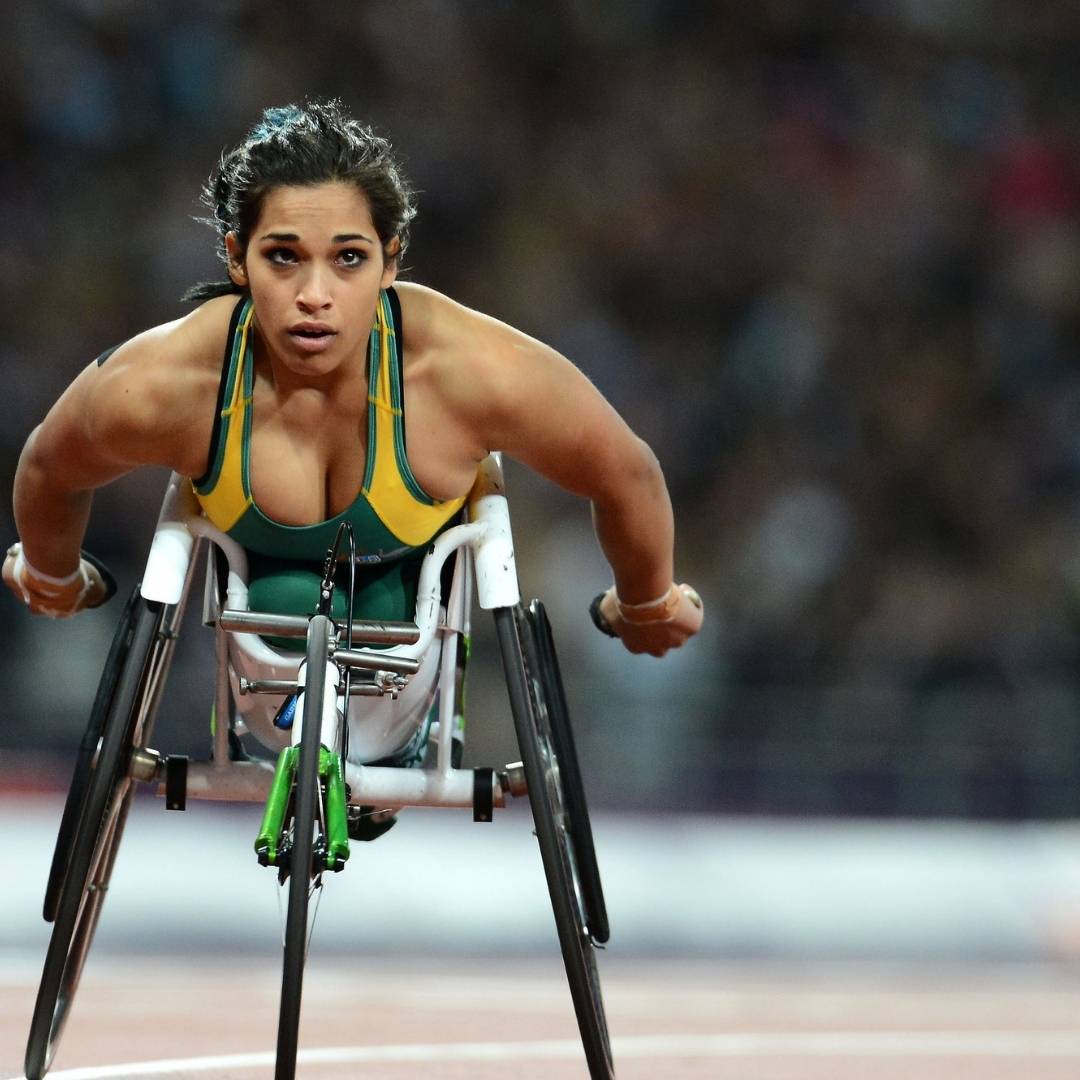
8. Madison de Rozario - Para Athletics
Madison de Rozario is one of the most successful Para athletes Australia has produced. She won gold in the 800m T53 and marathon T54 at the Tokyo 2020 Paralympics, and followed that with silver in the marathon and bronze in the 5000m at Paris 2024. Her record across four consecutive Paralympic Games is exceptional.
De Rozario has consistently used her visibility to challenge the segregation of disability sport from mainstream coverage and culture, arguing directly and publicly that Para athletes deserve equivalent media attention, broadcast time and sponsorship.
She has done this in a space that often prefers to frame Para athletes as symbols of resilience rather than elite competitors making legitimate demands.
That is the framing she has refused, consistently, and at the cost of being seen as “difficult” in environments that would rather celebrate her than reckon with the hard won learnings she accrued from the inside.
"I don't want to be an inspiration. I want to be a competitor." - Madison de Rozario
9. Lauren Parker - Para Triathlon and Cycling
Lauren Parker made history at the Paris 2024 Paralympics, winning gold in both the PTWC triathlon and the H1-4 cycling road race, and silver in the time trial. She was named Paralympics Australia's 2024 Paralympian of the Year.
Parker's story includes the kind of adversity that could easily be packaged as inspiration. She sustained a catastrophic spinal injury in a training accident in 2017. But what defines her career is not the injury. It is the discipline, structural preparation and competitive intelligence she brought to becoming one of the most dominant Para athletes in the world across two disciplines.
She is a precise example of what long-term investment in Para sport produces.
10. Lauren Jackson - Basketball
Lauren Jackson is a Naismith Memorial Basketball Hall of Fame inductee and one of the most influential basketball players in the world - not just in Australia. Her career spanned multiple WNBA seasons, international tournaments and three Olympic campaigns. She returned to the Australian national team in 2022, after years away from the sport, and played at the 2022 FIBA Women's Basketball World Cup.
Jackson's legacy in Australian basketball is foundational. She was the standard that defined what was possible for a generation of players and remains a reference point for talent development in the sport. She has also been direct (publicly and on the record) about the treatment of the women's national program, calling out Basketball Australia for poor resourcing and inadequate support at a time when that kind of accountability was not welcomed by the governing body.
She said it anyway (which we LOVE HER for!), and the conversation about conditions for women in Australian basketball is sharper for it.
11. Cathy Freeman - Athletics
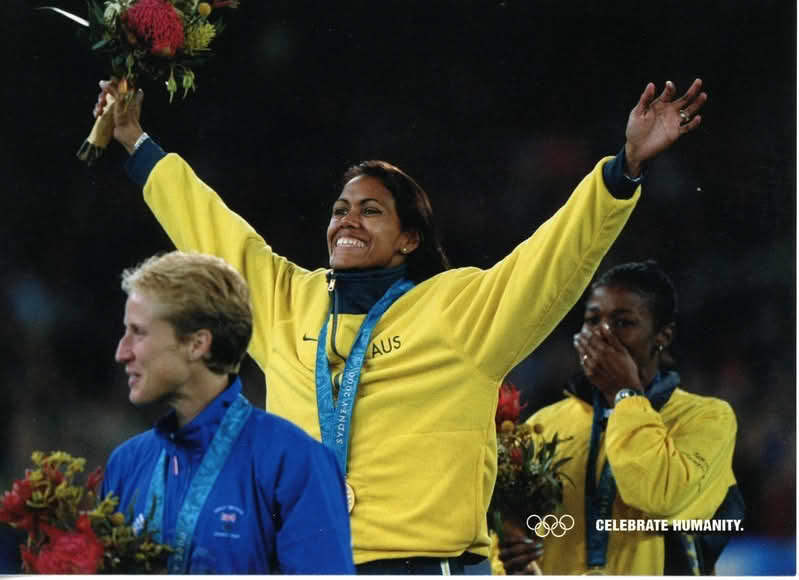
Cathy Freeman's 400m gold at the Sydney 2000 Olympics is one of the most significant moments in Australian sporting history. But the meaning of that performance extends well beyond the result.
Freeman carried both the Australian and Aboriginal and Torres Strait Islander flags on her victory lap, a deliberate and political act. It was not universally welcomed. There were voices within the sporting establishment and beyond it who objected. She carried both flags anyway, and brought Indigenous recognition into the centre of an event watched by hundreds of millions of people globally.
Freeman has since worked extensively in education and social programs for Indigenous youth through the Cathy Freeman Foundation, which has supported more than 2,000 Indigenous students. Her career and the work that followed it remain the clearest illustration in Australian sport of what an athlete can build beyond competition.
12. Michelle Jenneke - Hurdles
Michelle Jenneke has had a long and consistent career as a 100m hurdler at international level.
She has competed at multiple World Championships and Olympic Games and has been an important figure in bringing attention to women's sprint hurdles, an event that sits largely outside mainstream sports coverage in Australia.
Jenneke has also spoken publicly about the scrutiny female athletes face around appearance and the way that scrutiny can distort the conversation about athletic achievement. She has handled that with clarity and without defensiveness, which has made her a credible voice for younger athletes navigating the same pressures.

The research consistently shows that girls who can see women competing at the highest level are more likely to continue participating in sport through adolescence. The 2023 Australian Sports Commission's AusPlay data found that girls aged 12 to 17 who reported having a favourite female athlete were 1.6 times more likely to be regularly active than those who did not.
Visibility matters. The athletes above have provided it. So have the clubs, associations and governing bodies that have invested in women's competitions, broadcast rights and development pathways over the past decade. None of it is complete. The gender gap in sports media coverage, sponsorship and grassroots funding remains significant. But the trajectory has shifted.
The work these women have done - in competition, in governance, in public conversation and in the programs they have built or supported - is the infrastructure that makes staying in sport a realistic expectation for the next generation, not a fortunate exception.
That's worth marking on International Women’s Day (and, frankly, every day).